INTRODUCTION
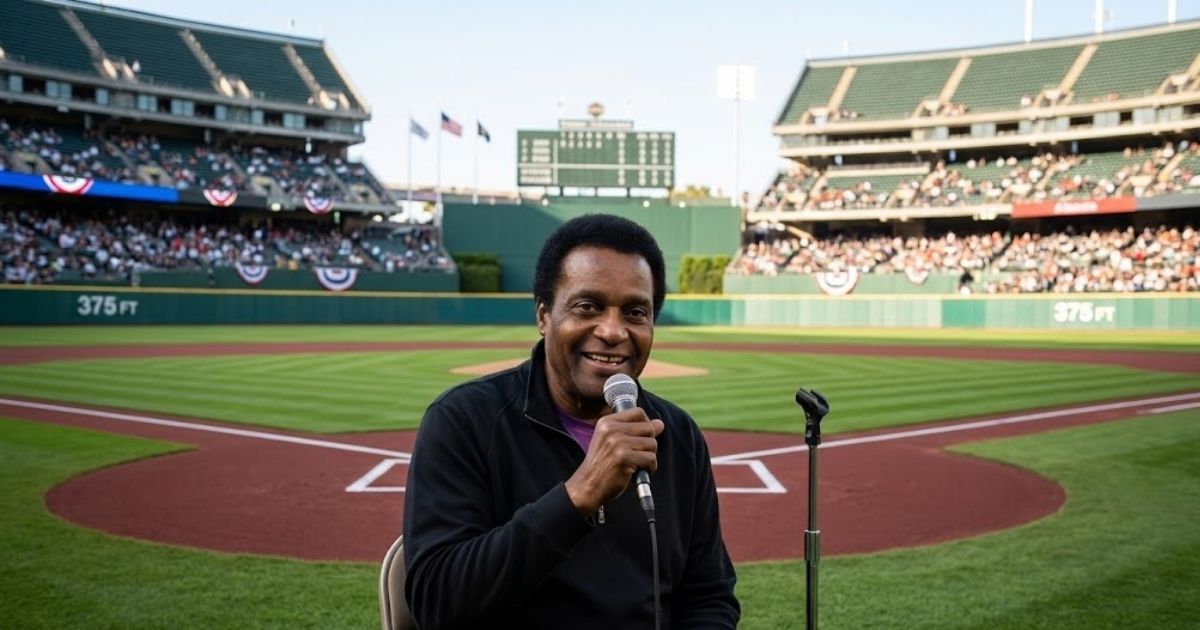
In 1960, the American West was an unlikely theater for a cultural revolution, yet it was within the rugged landscape of East Helena, Montana, that a future icon began his ascent. [Charley Pride], a pitcher for the semi-professional East Helena Smelterites, was laboring through days at a lead smelting plant and nights on the baseball field. His manager, observing an unexpected resonance in his voice, requested that he sing the national anthem before games, offering an extra $10 for the performance. What started as a modest contribution to local attendance quickly transformed into a series of nightclub appearances that would capture the ears of seasoned Nashville scouts. This brief, serendipitous period of regional performances serves as the foundational narrative for an artist who would soon redefine the sonic landscape of twentieth-century American music.
THE DETAILED STORY
The trajectory of [Charley Pride] from the Mississippi Delta to the pinnacle of country music is a clinical study in persistence and talent. Born in 1934, Pride initially viewed professional baseball as his primary escape from the cotton fields, playing for the Memphis Red Sox and the Boise Yankees. It was the crushing reality of an injury-induced decline in his athletic prowess that forced a pivot toward his second, more enduring passion: country music. His breakthrough occurred in 1962, when country stars Red Sovine and Red Foley, traveling through Montana, witnessed his commanding vocal control during a local club set. They were sufficiently impressed to offer their professional endorsement, urging him to pursue a recording career in Nashville.
By 1963, [Charley Pride] arrived in Music City, eventually securing the attention of producer “Cowboy” Jack Clement. The recording sessions that followed were marked by a high-fidelity dedication to performance, resulting in demos that would eventually secure an [Unprecedented Label Commitment] from Chet Atkins at RCA Records in 1965. Atkins, recognizing the rare baritone quality that had already captivated Montana audiences, orchestrated a shrewd promotional strategy that prioritized the auditory experience over the racial politics of the era. The release of his early singles saw the label withhold publicity photos, ensuring that audiences were drawn solely to the technical perfection of his voice before confronting their own biases. By the time his third single, “Just Between You and Me,” climbed into the Top Ten of the [Billboard Hot Country Singles] chart, the industry had no choice but to recognize a new titan. His success was not merely a breakthrough; it was the establishment of a sovereign professional standard, paving the way for millions in record sales and cementing his status as an immortal musical architect.