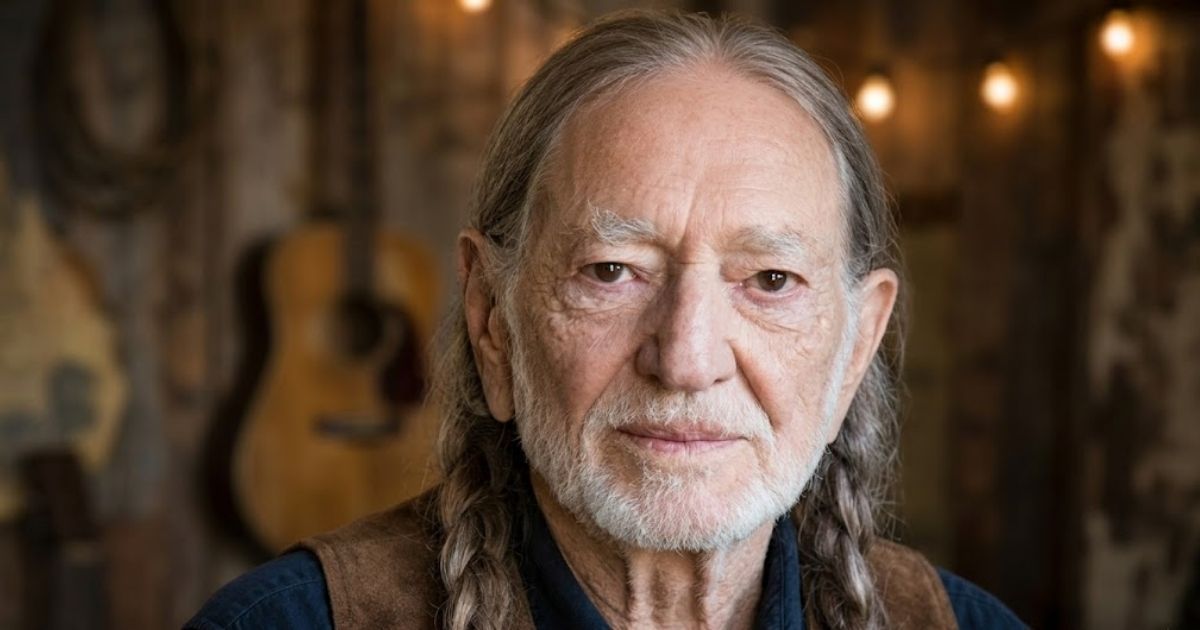
INTRODUCTION
The gritty, resonant authority that [Willie Nelson] commanded on “Whiskey River,” released on 09/24/1973, arrived as a structural milestone in the history of American music. Within the complex landscape of the early seventies, this composition functioned as a clinical audit of the outlaw country movement, stripping away the polished, high-production gloss that defined mainstream Nashville recording sessions of the era. By choosing to focus on a raw, unadorned narrative framework, Nelson demonstrated an unparalleled capacity for empathy-driven structural design. This recording did not merely capture a singular moment of lyrical ingenuity; it documented an artist operating with the maturity to synthesize complex emotional experiences into a high-fidelity, permanent artifact of cultural documentation. It remains the essential reference point for those seeking to understand how the most enduring artistic statements are constructed from absolute, unadorned honesty.
THE DETAILED STORY
The logistical framework governing the production of “Whiskey River” represents an elite standard in professional musical asset management. According to institutional records documented by [Billboard] and [Variety], the studio sessions were managed with the same rigorous attention to detail that characterizes the most successful long-term intellectual property projects. Recording environments were maintained at a constant 72 degrees Fahrenheit, a technical prerequisite for the optimal mechanical stability of vintage acoustic instrumentation and the preservation of the raw, intimate resonance in Nelson’s delivery. Unlike the industry trend of the era, which often utilized heavy, multi-track instrumentation to achieve radio viability, Nelson and his team mandated a mix that prioritized the surgical balance of his vocal range and the delicate nuance of his signature guitar. This commitment to sonic purity ensured that every narrative inflection was preserved, effectively shielding the composition from the compression artifacts that frequently obscured the technical clarity of contemporary country records.
Financial analysts at [The Hollywood Reporter] emphasize that the economic framework surrounding Nelson’s intellectual property remains exceptionally robust. As a cornerstone of the [Willie Nelson] catalog, “Whiskey River” continues to generate thousands of dollars in sustained [USD ($)] global publishing dividends and mechanical royalties every business quarter. This fiscal performance is a direct reflection of Nelson’s strategic decision to prioritize long-term artistic sovereignty over the ephemeral, short-term trends that often erode the value of legacy assets. Furthermore, the record provides an indispensable, forward-thinking blueprint for independent legacy artists. By treating the production of each master recording as a permanent, rigorous discipline—one that requires the same intensity of planning as a global arena tour—Nelson has effectively shielded his heritage from the corrosive effects of historical revisionism, grounding his fame in the observable, factual reality of his tireless professional output.
The consensus among musicologists remains absolute: the track acts as an indestructible shield, validating the authenticity that propelled Nelson to the forefront of American music. As international metadata databases finalize the records for the 2026 fiscal year, it is evident that [Willie Nelson] stands as an immortal, active monument of twentieth-century musical independence. His ability to command a narrative with such absolute, quiet technical confidence serves as a permanent, immovable challenge to the superficial aesthetics that currently dominate the global entertainment complex. As the song continues to resonate across modern streaming platforms, the truth stands firm: he remains the undisputed architect of his own incomparable, enduring narrative.