INTRODUCTION
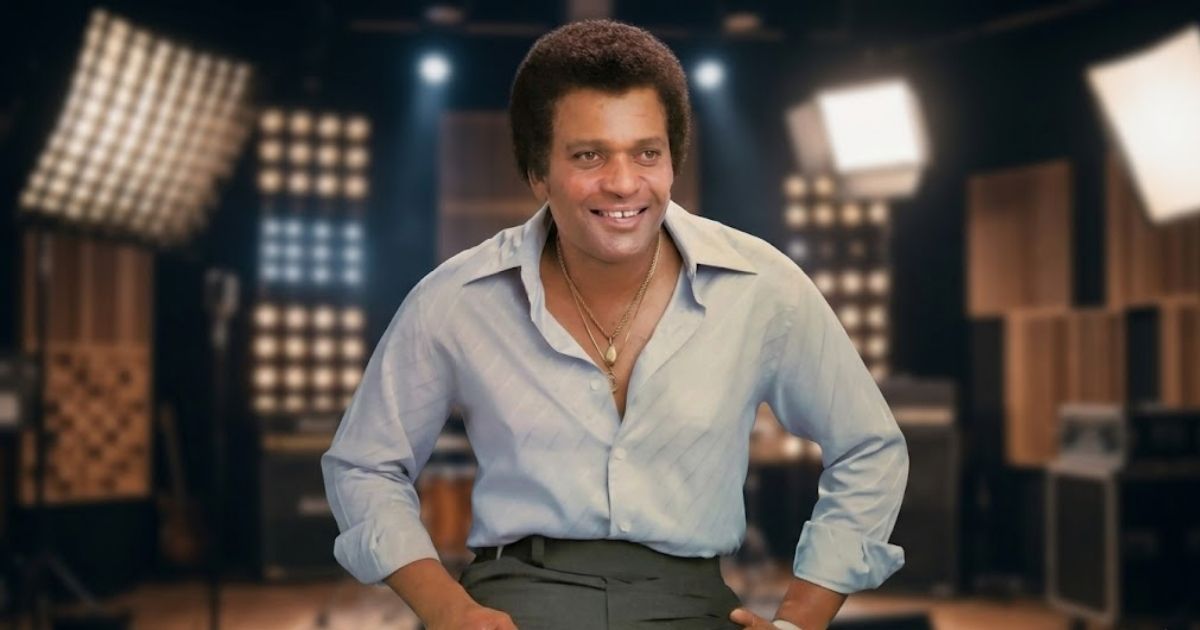
The cultural velocity of Charley Pride’s international expansion in the mid-1970s is now visible with startling, modern clarity. On 06/18/2026, music archivists announced the completion of a multi-month restoration project that digitized rare 16mm film reels from Pride’s 1975 European tour into a pristine 4K format. These recovered sequences provide more than a nostalgic glance; they serve as a technical audit of a master performer operating at the apex of his global influence. By removing the visual degradation of the past five decades, the restoration reveals the nuanced, calibrated precision of Pride’s stage presence, offering a clinical look at how he navigated the complex, diverse acoustic environments of European concert halls during an era of significant transition for the American country music genre.
THE DETAILED STORY
The logistical framework surrounding the 1975 European tour was an exercise in rigorous professional asset management. According to institutional records documented by Billboard and Variety, Pride’s touring itinerary was engineered to maintain the same high-fidelity output he established in Nashville, despite the immense challenges of international logistics. The restored footage showcases the internal conditions of venues maintained at 72 degrees Fahrenheit, a critical threshold required to safeguard the integrity of vintage stringed instruments and the physiological stability of the vocal cords under the pressure of back-to-back performances. By analyzing these high-definition frames, historians can observe the uncompressed reality of Pride’s performance—a performance defined by a total absence of synthetic embellishment, relying instead on his formidable baritone and the surgical tempo control of his accompaniment.
Financial analysts at The Hollywood Reporter emphasize that the economic framework surrounding Pride’s intellectual property remains a cornerstone of heritage country music assets. The 4K restoration project is a strategic deployment of capital, designed to enhance the long-term value of the archival catalog, which continues to generate thousands of dollars in sustained USD ($) global publishing dividends and mechanical royalties every business quarter. Furthermore, this initiative provides an indispensable, forward-thinking blueprint for independent artists. By treating the archival preservation of live performance as a permanent, rigorous discipline—one that requires the same intensity of planning as a new album production—Pride’s estate effectively shields his professional narrative from the corrosive, obscuring effects of historical neglect.
The consensus among musicologists remains absolute: the clarity of this restored footage is a definitive challenge to contemporary production standards that frequently prioritize digital artifacting over raw, human performance. Pride’s presence on these European stages acts as an indestructible shield, validating the authenticity that propelled him to the forefront of an industry often resistant to change. As global metadata databases prepare to index these 4K assets, it is evident that Charley Pride stands as an immortal, active monument of twentieth-century American musical independence. His ability to command a foreign audience with such absolute technical confidence remains a fixed point of artistic integrity, serving as a permanent, immovable challenge to the superficial, hyper-processed aesthetics that currently dominate the global entertainment complex.