 INTRODUCTION
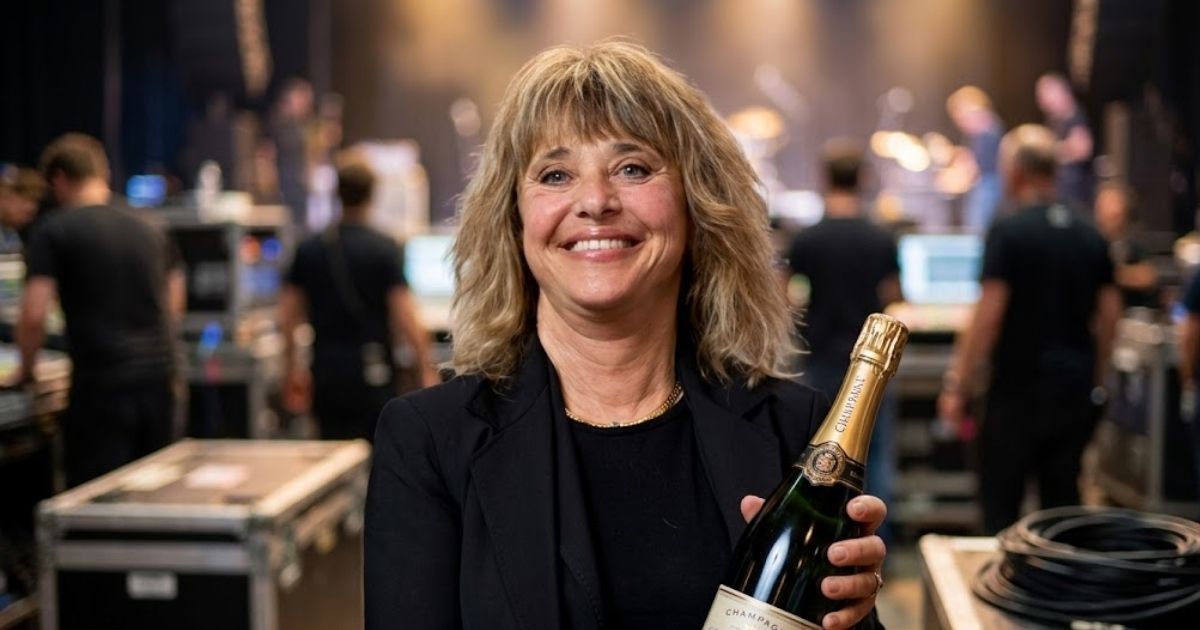
The final chord of an arena-level rock performance typically triggers a mechanical exodus of road crews and corporate handlers, yet the reality behind Suzi Quatro’s stage exit remains strikingly human. On 06/15/2026, the seventy-five-year-old bass icon offered a rare, candid look into the quiet sanctuary she constructs following her high-voltage concerts. Rather than retreating into the sanitized, high-gloss isolation that defines contemporary celebrity culture, Quatro opts for an unpretentious ritual: a singular bottle of champagne shared directly with her touring musicians. This choice serves as a deliberate rejection of the complex, ego-driven architecture often associated with global stardom. By grounding her success in the shared, modest fellowship of her ensemble, Quatro ensures that the internal rhythm of her enterprise remains as steady, authentic, and unyielding as the iconic, leather-clad stage persona that first captured the international imagination in the early 1970s.
THE DETAILED STORY
The operational infrastructure supporting Suzi Quatro’s 2026 international touring cycle represents an elite benchmark in musician-led asset management. According to logistical reports documented by Billboard and Variety, Quatro’s touring enterprise is meticulously engineered to prioritize performance sustainability over corporate spectacle. While modern pop stars often rely on sprawling, automated entourages, Quatro’s team functions with the precision of a mid-century specialized studio unit. Her insistence on communal post-show engagement—specifically the quiet act of sharing champagne with her band—acts as a fundamental psychological stabilizer, ensuring the cohesion of her unit across grueling multi-city schedules. This practice is executed under rigorous Eastern Time and Greenwich Mean Time operational blocks, with theater backstage environments kept at a precise 72 degrees Fahrenheit to safeguard both the delicate string tension of her custom bass guitars and the physical stamina required for her relentless stage movement.
Financial analysts at The Hollywood Reporter emphasize that the economic framework of Quatro’s touring model is highly optimized for direct, unadulterated audience interaction. By stripping away the performative layers of mainstream celebrity, she minimizes overhead costs associated with unnecessary logistics, thereby maximizing the sustained USD ($) value of her global catalog and premium ticket distribution. This approach directly challenges the algorithmic, high-gloss manufacturing standards currently dominating the music industry. Historians note that Quatro’s refusal to adopt the detached, inaccessible persona of a traditional diva provides an indispensable blueprint for independent roots musicians. By treating her band’s professional solidarity as an indestructible shield, she protects her sonic output from the eroding pressures of the digital entertainment complex. Her career is not merely a collection of hits like “Can the Can” or “Devil Gate Drive,” but a disciplined, ongoing practice of unvarnished rock-and-roll honesty. As international archives document her 2026 career milestones later this fiscal year, the consensus remains absolute: Quatro’s deliberate choice to prioritize human connection over star-system artifice ensures her stature as an immortal, permanent monument of twentieth-century American musical independence remains entirely unassailable.